Most people select plants for their gardens based on appearances. You look for beautiful blooming flowers or specific colors you like. Maybe it’s purple flowers in one section or pink in another. Bright colors and flowers do bring joy when you view your garden! As you think about what you’re planting in your space, whether it is flowers, shrubs, or trees, there are native plants to fill gaps in your garden design that will not only add beauty but provide resources for wildlife.
Flowers Help Pollinators
A flowering native plant can provide nectar for pollinators. This is an easy first step in better connecting your yard to the ecosystem at large.
You can add a beautiful flowering plant to your garden and help pollinators are the same time. Pollinators need these plants to provide vital resources to help them along their journey. The farther a pollinator needs to travel to find resources, the more energy they expend. Your garden can become a pit stop for pollinators before they continue on their way. Think wild bergamot (Monarda fistulosa) which is a favorite of bees. Or trumpet honeysuckle (Lonicera sempervirens) for attracting hummingbirds.
Host Plants Work Hard Too
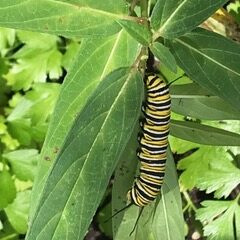
Besides flowering plants, you can add host plants to your garden. Instead of just being a pit stop in the journey, what if you could be a haven for growth? A plant that serves as a host for caterpillars can support the next generation of butterflies and moths. Growing more caterpillars provides food for birds.
How does this work? Many bugs seek specific plants to lay their eggs on. When the eggs hatch, the larvae or caterpillars need food. Host plants are the ones that fit right into the natural rhythm of their growth cycle because it’s specifically what they eat.
For example, common milkweed is the host plant for monarch butterflies. Monarch caterpillars only eat milkweed to grow and turn into butterflies. It’s simple: no milkweed means no monarchs. Milkweed does double duty as a host plant that feeds the caterpillars but also adds pretty flowers to your garden.
However, if we think bigger, the white oak tree (Quercus alba) is one of the most important multipurpose host plants you can have in your yard. The white oak is the host plant for over 200 caterpillar species! While a white oak tree isn’t as showy as a hydrangea, it still serves an important purpose in your landscape as a host plant. Because it feeds so many caterpillars, it also helps attract more birds to your yard.
Feed the Ecosystem
If you’re into birding, you can add plants to your landscape that specifically support birds. Plants that produce seeds and berries can provide food for birds through the seasons, while dense foliage can offer shelter for insects and other small creatures.
Some examples of multipurpose native plants:
- Dogwood (Cornus genus) – There are different species of dogwood, some are shrubs and some are trees that flower and produce berries.
- Blueberry (Vaccinium species) – Blueberry bushes provide fruit that you and birds visiting your garden can both enjoy.
- Serviceberry or shadbush (Amelanchier genus) – These can be large shrubs or small trees with lovely spring flowers and edible berries.
It’s also worth remembering that habitat isn’t only about what you plant. Avoiding pesticides, leaving some fallen leaves in place, and allowing seedheads and stems to remain through the winter can provide additional resources without requiring additional space.