College provides 1,500 plants for Thacher Park sale
At the Thacher Park Native Plant Sale we source every plant from growers who are committed to helping native plants and natural landscapes thrive. But one growing partner takes that commitment a step further by nurturing a new generation of gardeners and landscape professionals who understand the value of native plants.
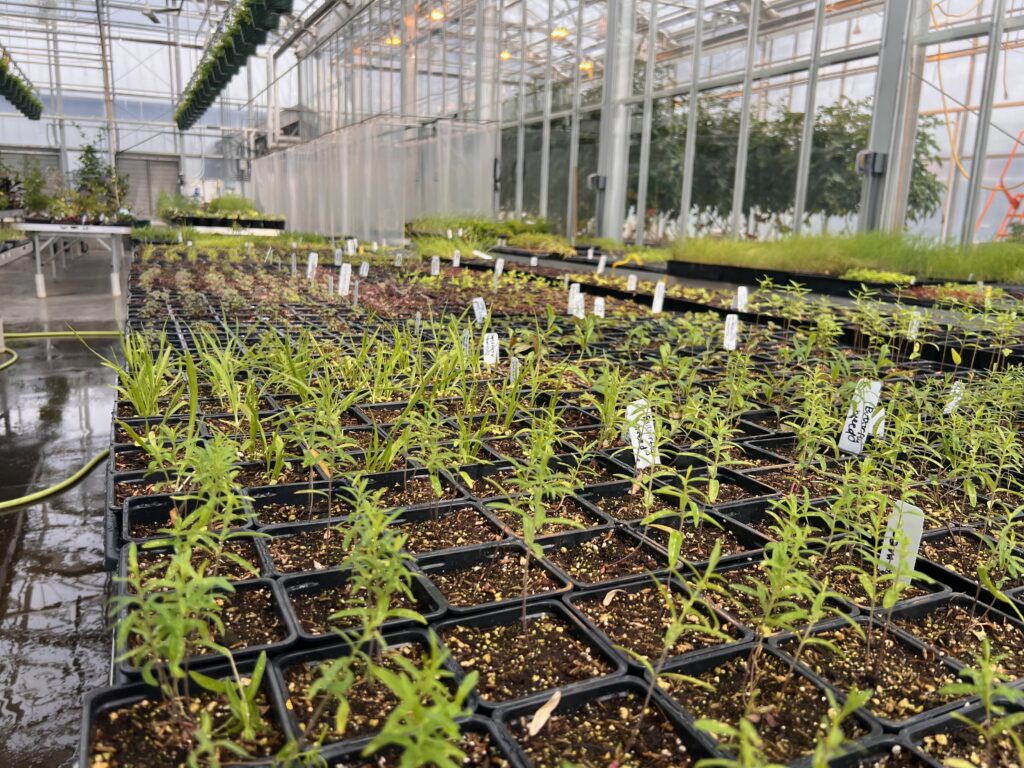
Since 2024 students at the State University of New York College of Agriculture and Technology at Cobleskill have produced hundreds of plants for sale at Thacher. The first year the Wildflower Crop Production classes taught by Associate Professor Tim Marten grew 800 butterfly-attracting plants for the sale. The following year Marten’s classes grew 1,000 plants including larval host species like milkweeds and violets. For this year’s sale, the classes expect to offer about 1,500 plants like wood mints, goldenrods, asters and more.
“The Thacher Native Plant Sale would not have had the kind of success we’ve achieved in getting plants into the ground around the Capital Region without the contributions of Tim and his students,” said Rosemary Mix, president of Wild Ones Capital Region New York Chapter. The annual Thacher sale is a co-presentation of Wild Ones Capital Region NY, Friends of Thacher State Park and the Emma Treadwell Thacher Nature Center with proceeds benefitting Wild Ones and the Friends of Thacher.
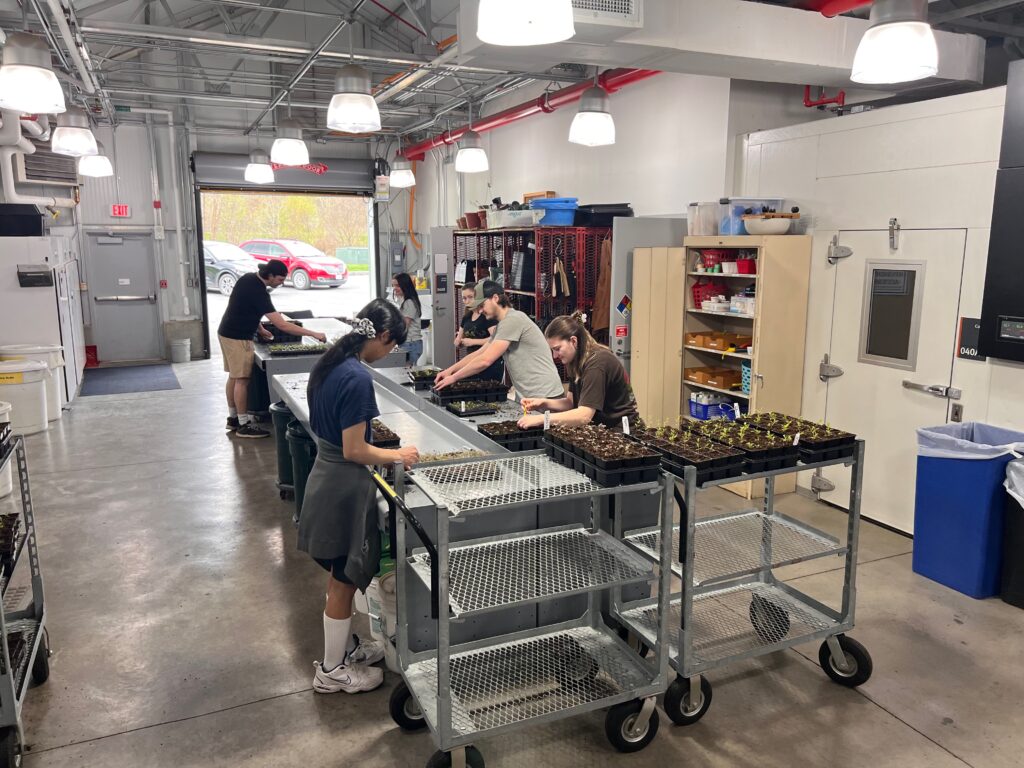
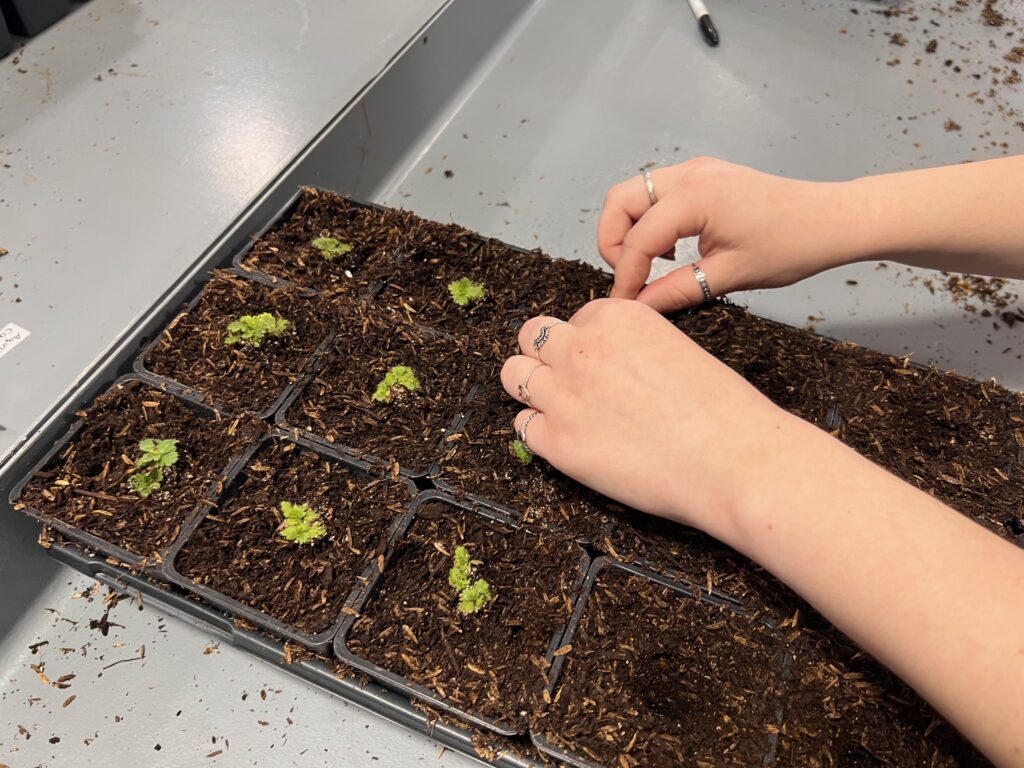
Professor Marten explains that Cobleskill students don’t just learn about native plants. They have the opportunity to grow them from seed to finished product for real use in the community. That connects classroom learning directly to ecological impact.
“Native plant production gives students a full-cycle understanding of the process: propagation, crop timing, environmental controls, pest management, and quality standards,” says Marten. “At the same time, it reinforces a larger responsibility; these plants support pollinators, improve habitat, and contribute to more resilient landscapes across our region.”
According to Professor Marten, this approach reflects what applied education should be. “Students are not working on hypothetical exercises; they are producing plants that will be installed in real landscapes, by real people, with real ecological value. That connection changes how they engage. It builds skill, but it also builds ownership and awareness of the role they play in shaping healthier environments.”
“Another key element of the work in Cobleskill is the pairing of ecological focus with production decisions that reflect the same values,” says Marten. “Our containers are sourced from East Jordan Plastics because of their closed-loop recycling system and commitment to post-consumer materials. Their process takes used greenhouse and retail plastics, reclaims and regrinds them, and turns them back into new containers, often with a majority of recycled content and, in some cases, up to 100% post-consumer recycled material. Containers move from growers to retailers to consumers, then back through collection systems for remanufacturing and reuse.”
The Cobleskill-grown plants along with many more will be available on May 16 at Thacher Park.
To learn more about the upcoming sale, visit our announcement page.